Legal Author

About Legal Author

The Legal Stop is a straightforward online business using information technology for the public good. We aim to make the provision of legal services accessible and transparent for people and businesses alike. We provide affordable and transparent diverse legal services on a fixed fee basis. Our services include: Fixed Fee Legal Advice from UK Solicitors and Barristers, Fixed Fee Document Drafting and Legal and Business Document Templates.

What if Steve Jobs was a lawyer?

This week, we have celebrated the 30th Birthday of Macintosh. The revolutionary invention changed the way we thought about computers. At The Legal Stop, we like being innovative. The launch of our Pay-As-You-Go Fixed Fee Legal Services Scheme allows anyone to access quality legal services on the go, for very low fee. We’re sure this will change the way you think about legal industry.

The first Mac design seems a little bit oldy now, but it was unbelievably innovative in 1980s.

The first Mac design seems a little bit oldy now, but it was unbelievably innovative in 1980s.

The 20-year-old Steve was working in a garage with his friend Steve Wozniak – they both created something that was a milestone in computer revolution.

It might sound odd today, but they weren’t the first ones to introduce a personal computing machine at all. In fact, there were a couple of these already on the market, and people thought computers should be used for big scientific calculations, rather than searching for a chocolate cake recipe and sharing funny cats pictures.

The questions is – how did a garage-based boy manage to entirely shake up the whole concept of computers?

The answer is pretty simple: design, quality and innovation. Instead of trying to make another big, complicated computing machine, he decided to stand out of the crowd and invent a computer that will come with user-friendly, robust and easy-to-use interface.

30 years later, can you imagine entering a couple of complicated commands in the terminal prompt?
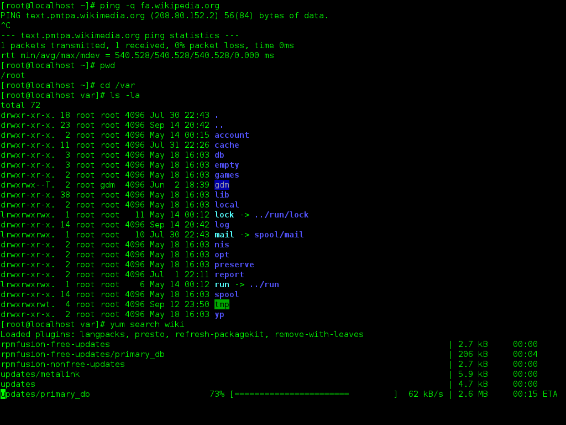
 A couple of sample commands in a text-based system needed to handle Wikipedia. Just a teaser of pre-Jobs computer world.

A couple of sample commands in a text-based system needed to handle Wikipedia. Just a teaser of pre-Jobs computer world.

Now, let me ask you what you think about the legal services industry today. Isn’t it something like the command prompt? You want a simple legal document. Just imagine all these procedures, going through lawyer’s assistants, booking appointments, struggling with a list of forms and declarations to sign.

All in all, you end up with a bunch of long-term agreements, “it depends” as an answer for all your questions, and an invoice that you don’t even want to look at.

What if you could buy a document or order a legal service just as simply as you buy a song on iTunes? Sounds like a dream? At The Legal Stop, we just made it happen.

We aren’t just another legal company. We think different – and we are different. We have invented a Pay-As-You-Go Fixed Fee legal services app that will suit all your legal needs. Do you need an employment contract? Or maybe you want a loan agreement? Legal advice or court representation? We’ve got an app that will cover it all in seconds, and yes, it’s just a few clicks away.

GO to our APP

Our app comes with friendly, easy-to-use and fully secure interface, so that you can have all your legal requirements at your fingertips.

source: freedigitalphotos.net

Another great deal! I just tapped in the app and sorted the contract out. Thank you, The Legal Stop!

Today’s business is a 24/7 thing, especially with start-ups building up their client base. Just picture this – it’s 2am in the morning and you need a legally binding document to close the deal with your client. And, as always, (start-up entrepreneurs will tell you…) need it NOW.

Well, you can try your best waking up your solicitor with a phone call or rush through the Internet websites offering different templates – but are you sure this will give you a legally binding document that will secure your interests?

The Legal Stop is here to help – simply unlock your smartphone, go to our app and tap into a list of documents. 60 seconds and you’re done. Sign off the document and relax watching your business grow.

You don’t have to worry about the costs, either. Our offer is straightforward – no long-term contracts, low fees and quality documents whenever and wherever you need.

We’re so inspired about the start-ups and SMEs that begin with a small idea and grow with us to become successful multi-million companies. Steve Jobs has passed away, but he left us with his wisdom. If he was a lawyer, he would surely invent something like our legal app. We feel that we have to continue his legacy.

Let’s go invent tomorrow instead of worrying about what happened yesterday.

4

Shareholders’ Agreement

A Shareholders’ Agreement is a legal contract that sets out the rights of a company’s shareholders and offers protection to each and all of these individuals. Once a company has more than one shareholder it is important to have an agreement like this in place because standard company law may not quite fit a company’s particular circumstances.

The key individuals in a company often rely on the Articles of Association, one of two constitutional documents, to protect their rights but in truth these do not cover shareholders’ rights completely or in every situation. In the absence of a shareholders’ agreement some potential issues that can arise are:

  • Removal of a director by half the shareholders passing an ordinary resolution;
  • Directors’ versus members’ rights in key areas such as pay, benefits and dividends;
  • Significant decisions being made by a majority of directors, overruling individual directors who may be majority shareholders;
  • Conflict over the direction of the business;
  • Disagreements about the shareholders’ exit strategy;
  • Amendment of the Articles of Association stripping away shareholders’ protections by a 75 percent majority of shareholders;
  • Deadlock resulting in a failure to resolve disputes that goes on to affect the smooth running of the company.

To avoid these and other issues, a Shareholders’ Agreement is usually put in place to protect all parties. The three most common agreements are:

Shareholders’ Agreement – Protection Minority Shareholders

Designed for companies with both minority and majority shareholders and where new shareholders are joining or the company wishes to change the terms of the existing relationship. These agreements protect the interest of shareholders with less than 50 percent of the company’s issued share capital. Generally, minority shareholders are in a weak position under company law as a simple majority will overrule them in most cases. This is not always appropriate. For example, in cases where an outside investor, such as an angel investor, is involved with the company, this party will often want more rights than standard company law allows. Having a Shareholders’ Agreement – Protection Minority Shareholders in place sets out the rights and duties of the shareholders and covers aspects such as the appointment of directors and how directors’ decisions are made. It also provides for shareholders to be directors, as this is not automatic under company law, and can cover other important aspects such as share transfers, confidentiality clauses, non-compete, non-solicitation and non-poaching clauses.

Shareholders’ Agreement – Protection Majority Shareholders

This legally binding contract protects those with more than 50 percent of the issued share capital in the company and is designed to cater for situations where new shareholders are joining the company or the relationship between shareholders is changing. The agreement covers the key aspects of shareholder rights including share transfers, a drag-along clause (ensuring minority shareholders cannot obstruct a sale of the company), confidentiality, non-compete, non-solicitation and non-poaching clauses.

Shareholders’ Agreement – Equal Shareholdings

This type of agreement is extremely useful in cases where two or more shareholders have an equal stake in the company, such as two shareholders each holding 50 percent of the company or three directors holding one-third each, common occurrences when firms are starting out. The Shareholders Agreement – Equal Shareholdings sets out the rights and obligations of all shareholders with respect to share transfers, how to deal with deadlock situations, along with confidentiality, non-compete, non-solicitation and non-poaching clauses.