It is usual for landlords of commercial property to request a new tenant to provide a rent deposit at the start of a new lease. The rent deposit, which is typically 6 months’ rent, has to be paid upfront by the tenant to the landlord and it provides some assurance that the tenant is financially viable to take on the lease. In other words, a rent deposit is a sum of money provided as security by a tenant to their landlord in respect of a commercial property lease, it is similar to rental deposits used in residential lettings, but the money is normally held by the landlord and not in a government-backed tenancy deposit scheme (TDP).
Rent deposits are often required in one of the following situations:
-
on the grant of the lease;
-
as a precondition for the grant of the landlord's consent to the assignment of the lease.
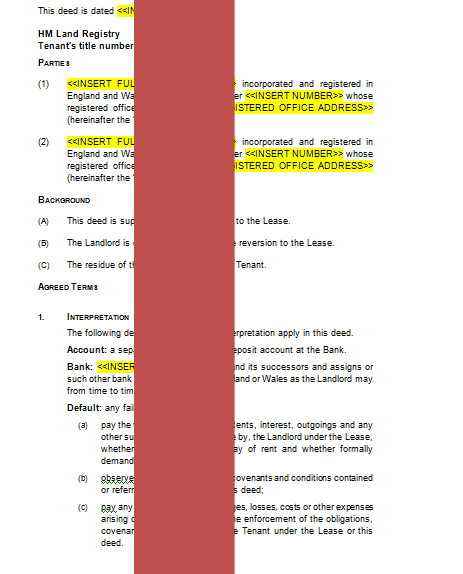
The rent deposit will usually be documented in a Rent Deposit Deed, which is a document which sets how a landlord secures a commercial tenant's deposit. The deposit will usually be held by the landlord for the term of the lease. In practice the deposit will be returned to the tenant at the end of the term of the lease, however, if the tenant has failed to make payment of rent the landlord will be in a position to deduct the amount from the rent deposit, and the tenant would then be required to top-up the rent deposit. This makes a Rent Deposit Deed attractive for landlords.
There is no perfect structure for a Rent Deposit Deed, and Rent Deposit Deeds can be structured in several ways, depending on the specific characteristics of the transaction. Here are few examples:
-
the deposit may be held by the landlord on trust for the tenant;
-
the deposit may be held by the landlord on behalf of the tenant but charged to the landlord;
-
the deposit may be held by the tenant, but charged to the landlord;
-
the deposit may be held by an independent third party as a stakeholder;
-
the deposit may be held by the landlord as part of the landlord's general funds.
It is best to provide for the rent deposit in a separate Rent Deposit Deed which clearly sets out the circumstances under which the landlord can hold on to part or all of the deposit (in practice, a landlord will only be able to draw upon the money if the tenant fails to pay their rent or breaks an agreed covenant in the lease).
This Rent Deposit Deed is structured so that the deposit is held by the landlord on trust for the tenant, and it is drafted on the assumptions that both the landlord and the tenant are corporate entities incorporated in England and Wales and not individuals, and the property subject to the lease is located in England or Wales.
Please note - if you intend to adapt this document for use when either (or both) the landlord and tenant are individuals, speak to a tax advisor as there are likely to be trust and tax issues specific to individuals.
This Rent Deposit Deed contains the following clauses:
-
Definitions and Interpretation
-
Deposit
-
Landlord's Duties
-
Interest
-
Withdrawals
-
Deposit Top-up
-
Repayment
-
Sale of Reversion
-
Re-entry
-
Indemnity
-
Notices
-
Third Party Rights
-
Governing Law and Jurisdiction
This Rent Deposit Deed is in Microsoft Word format, written in plain English easy to use and edit.
RELATED DOCUMENTS:
|